
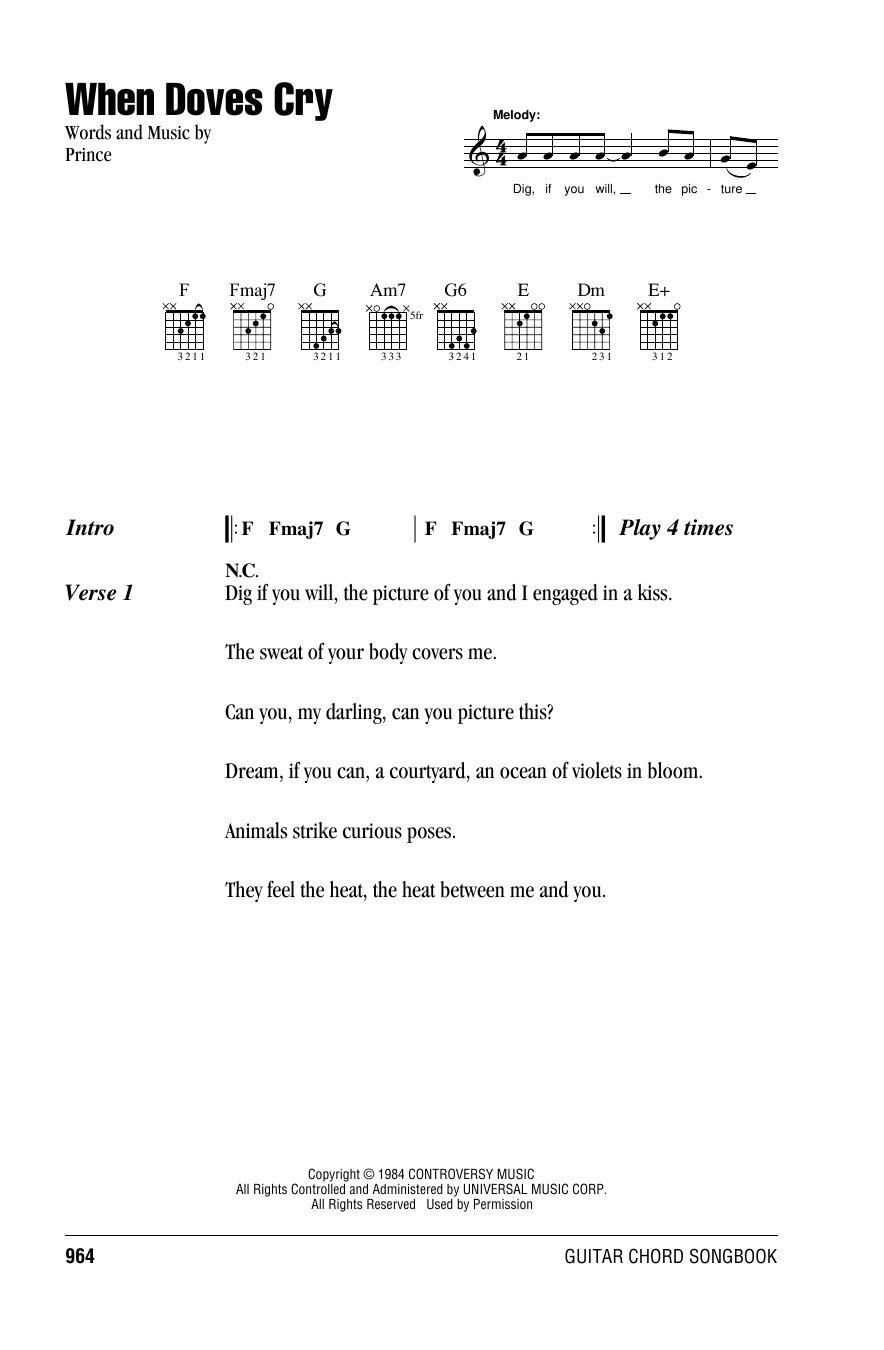
When doves cry chords are often sought after by music enthusiasts looking to capture the emotional essence of Prince’s iconic song. To master the haunting melody, start by focusing on the signature guitar riff and unique chord progressions. Channel the raw passion and vulnerability of the lyrics through your fingertips as you navigate the intricate harmonies. Dive deep into the music, letting the chords guide you through a journey of love and loss, just like the doves in Prince’s poignant ballad. Let’s unravel the mystery behind the captivating sound of ‘When Doves Cry.’

Exploring the Enchanting World of When Doves Cry Chords
Welcome, music enthusiasts! Today, we embark on a melodious journey delving into the fascinating realm of “When Doves Cry” chords. This iconic song by the legendary artist Prince is not only a classic but also a treasure trove of musical brilliance. Let’s unravel the mysteries behind the chords that make this song truly unforgettable.
The Story Behind “When Doves Cry” Chords
Before we dive into the technical aspects of the chords used in “When Doves Cry,” it’s essential to understand the story behind this timeless piece of music. Released in 1984 as the lead single from Prince’s album “Purple Rain,” the song captivated audiences with its unique sound and emotional depth. One of the key elements that set this song apart was its innovative chord structure.
Deconstructing the Chords
Now, let’s break down the chords that form the backbone of “When Doves Cry.” The song is characterized by its use of unconventional chord progressions and sparse instrumentation, creating a haunting and evocative atmosphere. The main chords used in the song are A minor, G major, and F major. These chords, when combined in Prince’s masterful arrangement, evoke a sense of yearning and introspection that resonates with listeners.
A Minor
The A minor chord serves as the foundation of “When Doves Cry,” lending a sense of melancholy and depth to the music. When played on a guitar or piano, the A minor chord creates a somber yet beautiful sound that sets the tone for the entire song. Its minor key contributes to the haunting quality of the music, making it a perfect fit for the emotional lyrics of the song.
G Major
Transitioning to the G major chord in “When Doves Cry” adds an element of tension and release to the music. The shift from A minor to G major introduces a sense of movement and momentum, propelling the song forward and keeping listeners engaged. The G major chord provides a contrast to the A minor chord, creating a dynamic interplay of emotions within the music.
F Major
Lastly, the F major chord in “When Doves Cry” brings a sense of resolution and finality to the song. As the closing chord in many sections of the music, F major helps to tie together the various musical themes and motifs present throughout the song. Its warm and full-bodied sound adds a sense of completion to the music, leaving listeners with a satisfying conclusion.
The Magic of Unconventional Chord Progressions
What sets “When Doves Cry” apart from other songs of its time is its daring use of unconventional chord progressions. Rather than following traditional patterns, Prince took risks by combining unexpected chords and dissonant intervals, creating a sound that was both innovative and groundbreaking.
By challenging the conventions of popular music, Prince was able to evoke raw emotions and tell a compelling story through his music. The use of unconventional chord progressions in “When Doves Cry” adds layers of complexity and intrigue to the song, captivating listeners and inviting them to explore new sonic landscapes.
Exploring Chord Inversions and Voicings
In addition to the choice of chords, the way they are played also contributes to the unique sound of “When Doves Cry.” Prince’s use of chord inversions and voicings adds depth and texture to the music, creating a rich tapestry of sound that is both intricate and mesmerizing.
Chord inversions allow musicians to play the same chord in different positions on an instrument, altering the sound and feel of the music. In “When Doves Cry,” Prince’s masterful use of chord inversions enhances the emotional impact of the song, creating a sense of tension and release that keeps listeners on the edge of their seats.
Furthermore, the voicings of the chords in “When Doves Cry” showcase Prince’s keen sense of musicality and artistry. By experimenting with different voicings and arrangements, Prince was able to create a lush and captivating sonic landscape that has stood the test of time.
Conclusion: The Timeless Allure of “When Doves Cry” Chords
As we conclude our exploration of “When Doves Cry” chords, it becomes evident that Prince’s musical genius shines brightly in this iconic song. Through his innovative use of chords, unconventional progressions, and masterful arrangements, Prince created a timeless masterpiece that continues to enchant and inspire music lovers around the world.
Next time you listen to “When Doves Cry,” pay close attention to the chords that underpin this musical gem. Feel the emotions that swirl around each chord change and let yourself be carried away by the haunting beauty of Prince’s musical legacy.
Remember, music is a journey of discovery, and “When Doves Cry” chords are just one piece of the vast and intricate puzzle that is the world of music. Keep exploring, keep listening, and keep discovering the magic that music has to offer.
When Doves Cry – Prince | EASY GUITAR | Scrolling Chords
Frequently Asked Questions
Can you provide the chords for “When Doves Cry” by Prince?
Yes, the chords for “When Doves Cry” by Prince are Am, G, C, Cm, F, and Em. The song does not use a traditional bassline, making the chords essential for the harmonic structure.
Is there a specific strumming pattern to follow when playing “When Doves Cry”?
While there isn’t a specific strumming pattern prescribed for “When Doves Cry,” you can experiment with different strumming styles to find one that complements the song’s unique rhythm and feel. Try strumming in a rhythmic, percussive manner to capture the essence of the song.
Are there any challenging chord changes in “When Doves Cry” that I should be aware of?
One challenging aspect of playing “When Doves Cry” is the transition between the chords C and Cm. Practice moving between these chords smoothly to ensure a seamless progression throughout the song. Take your time to master this change, as it plays a crucial role in the song’s sound.
Final Thoughts
In conclusion, mastering the ‘When Doves Cry’ chords is essential for any aspiring guitarist. Understanding the intricate chord progressions and unique voicings will elevate your playing to new heights. Practice diligently to capture the emotive essence of Prince’s timeless hit. Let the haunting melody and powerful lyrics guide your interpretation. Immerse yourself in the music to truly appreciate the magic of ‘When Doves Cry’ chords.
More Stories
When Does Dunkin Stop Serving Breakfast: Timings Revealed
Discover When Was 27 Weeks Ago: Answers & Calculation Guide
When Can I Itch My Tattoo: Proper Healing Timeline